University studies
At university, you leave behind the rigid structure of the school and enter an environment where responsibility and initiative become essential. Schedules are more flexible, methods more varied, and students find their own rhythm of learning, helping them develop true intellectual autonomy.
Access to university studies
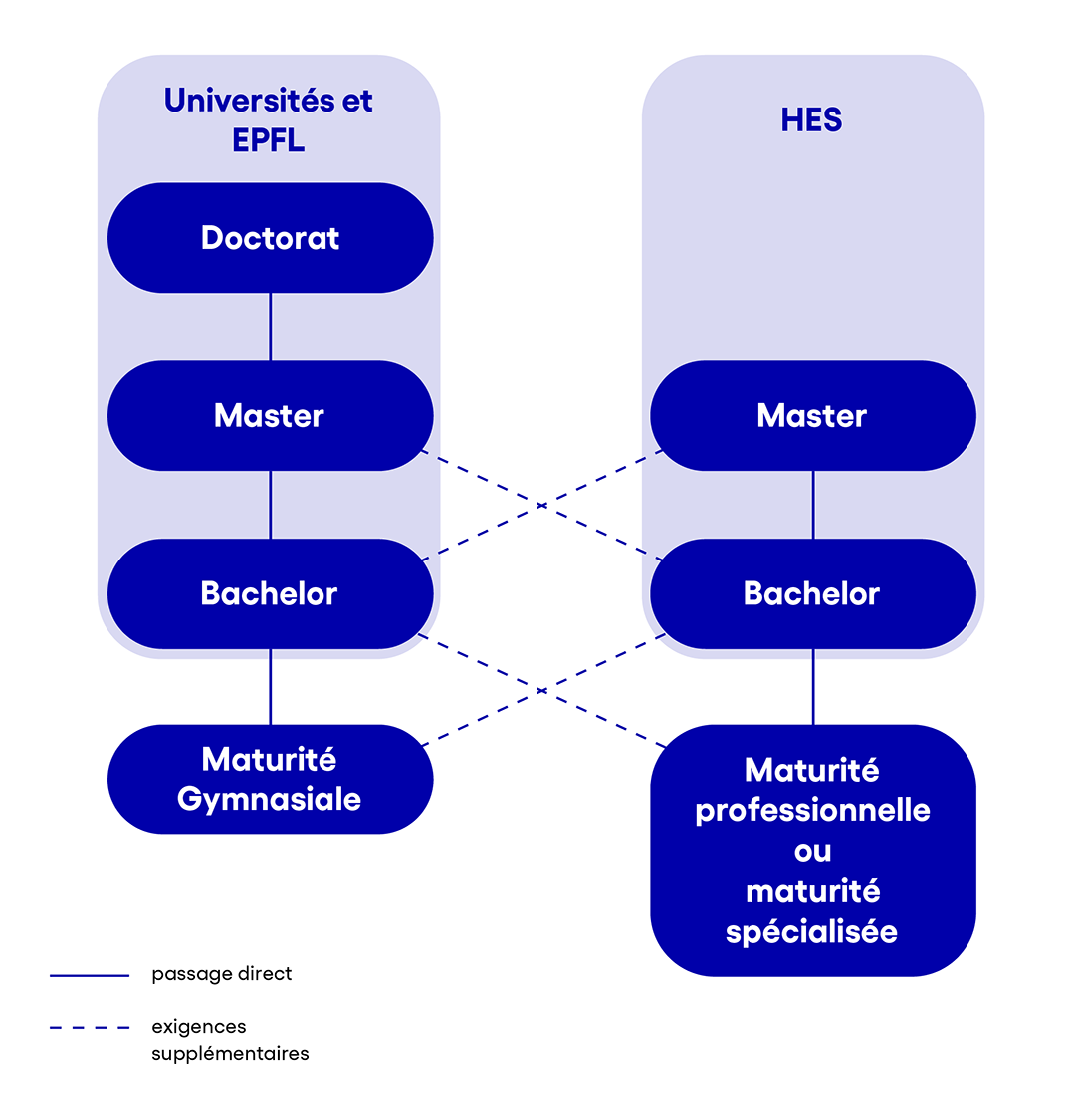
The Swiss Academic Baccalaureate (Maturité) is the best means of securing a place at university. If you have a Vocational or Specialised Baccalaureate, you can also enter university studies by passing a supplementary examination (passerelle Dubs), as offered by the State Secretariat for Education, Research and Innovation.
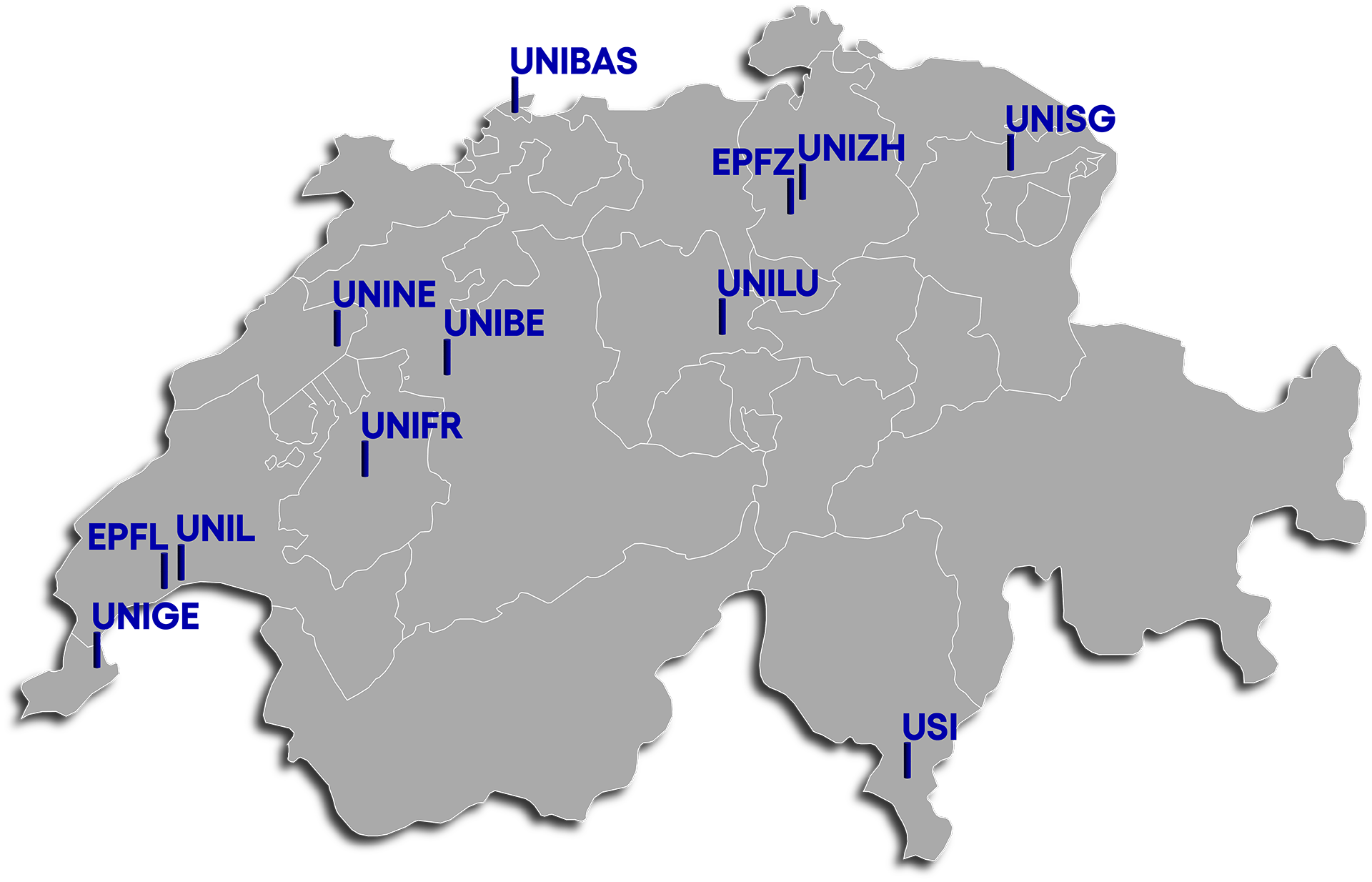
Switzerland has twelve universities, five of which are located in French-speaking Switzerland.
Young talent
The aim of the Young Talents initiative is to enable particularly gifted and motivated high school students to take university courses from the third or fourth year of their high school education.
Within the framework of this incentive program, students have the opportunity to take exams and thus obtain ECTS credits that are valid in the event of definitive registration at the University of Neuchâtel.
This initiative is open to high school students in Bern and Neuchâtel.
Contact :
Nicolas Chappuis
Service académique
nicolas.chappuis@unine.ch
Tél. +41 32 718 10 39
Structure of studies
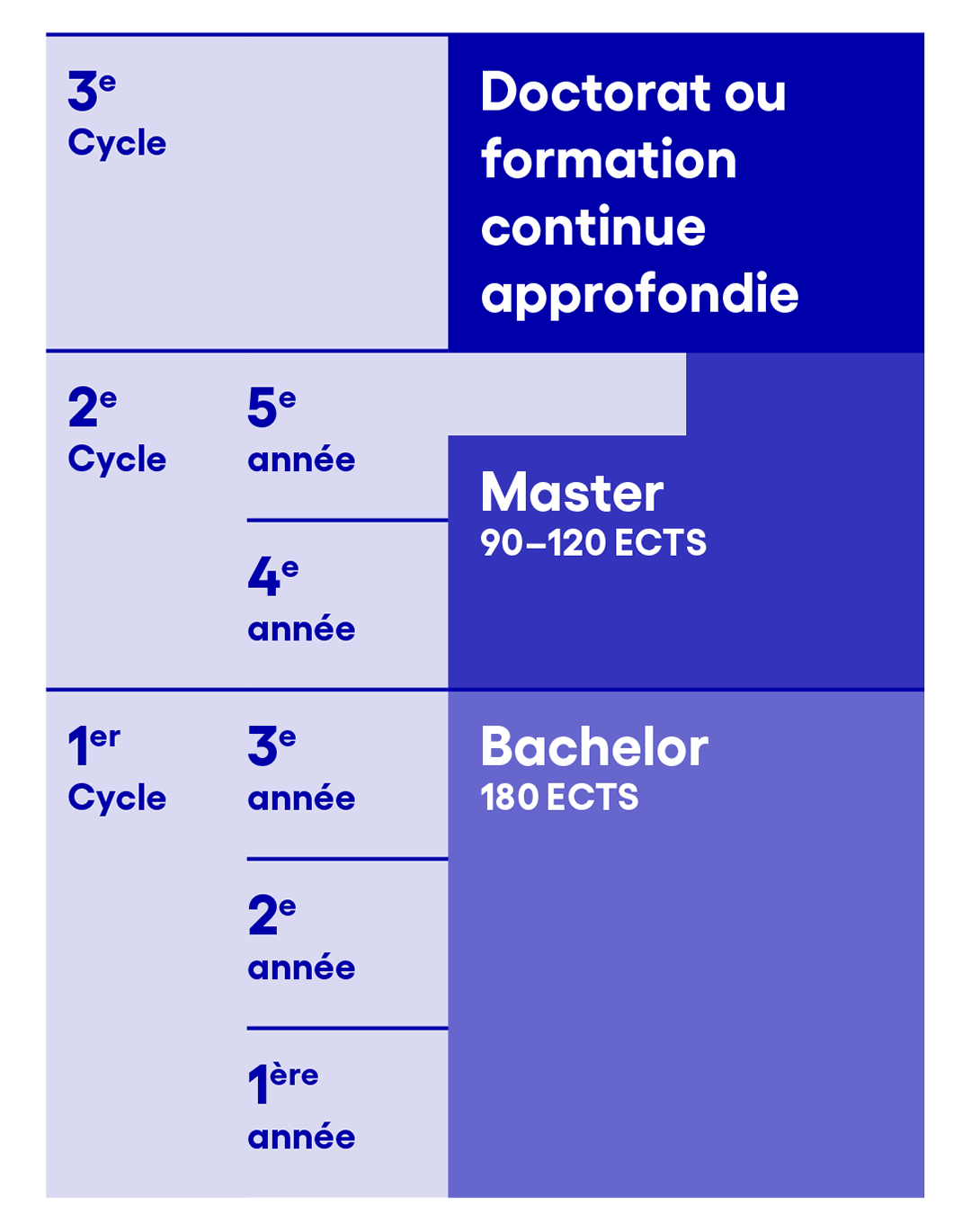
University studies are organised into three phases. The first phase of university studies, the Bachelor’s degree (university baccalaureate), corresponds to 180 ECTS credits (typically completed over six semesters). In this first stage of university education, students acquire a methodological and scientific way of thinking. In principle, the Bachelor’s degree leads to further study at Master’s level.
The second phase of studies, the Master’s degree, lasts three or four semesters (90 or 120 ECTS) and allows students to enhance the knowledge they acquired during the first phase, specialise in a particular discipline, or pursue interdisciplinary studies. It concludes with a research project or dissertation, and in some cases an internship. Students may obtain a Bachelor’s degree at one university, and continue with a Master’s degree at another.
Those who wish to devote themselves to research or teaching, or simply improve their expertise in their field, can continue their education with a doctorate. This takes the shape of a research project and involves paid employment. It concludes with the writing and defence of a thesis.
Duration and organisation of studies
The duration of university studies depends on the desired level and the number of credits validated each semester. The maximum permitted duration of studies is 5 years for a Bachelor’s degree and 3 years for a Master’s degree. Academic years are divided into two parts: the autumn semester, which runs from September to December, and the spring semester, which goes from February to May. At the University of Neuchâtel, examinations take place after each semester.
ECTS credits
At each stage of your education, you must acquire ECTS credits (European Credit Transfer and Accumulation System). This system aims to facilitate the recognition and comparison of programmes taught across Europe (1 ECTS credit corresponds to 25-30 hours of work, with preparation for assessments included).

