Encapsulation of Bacterial-Fungal Consortia for Agricultural Applications
Combining bacterial-fungal interactions and microencapsulation for the development of new microbial biocontrol agents against soil-borne fungal diseases.
Funding
SNSF collaborative projects (Encapsulation of bacterial-fungal consortia for agricultural applications). Start 01.01.2025 / end 31.12.2028.
PI Dr. Saskia Bindschedler
Co-PI Alexandra Kämpfer-Homsy (HE-Arc), Natacha Bodenhausen (FiBL)
Yearly, fungal pathogens are responsible for 13% of agricultural losses. Those transmitted through the soil are particularly difficult to control because they can infect multiple plant species and survive for more than 10 years without a host. Synthetic fungicides are the most effective control method, but they have drawbacks such as the development of resistance and harmful effects on ecosystems and human health. Furthermore, there is a growing demand for pesticide-free food. Thus, it is urgent to develop alternative control methods. A number of biofungicides exist on the market, but their effectiveness is inferior to that of synthetic fungicides. Indeed, in the soil, they compete with other microbes, limiting their growth, dispersion, and action.
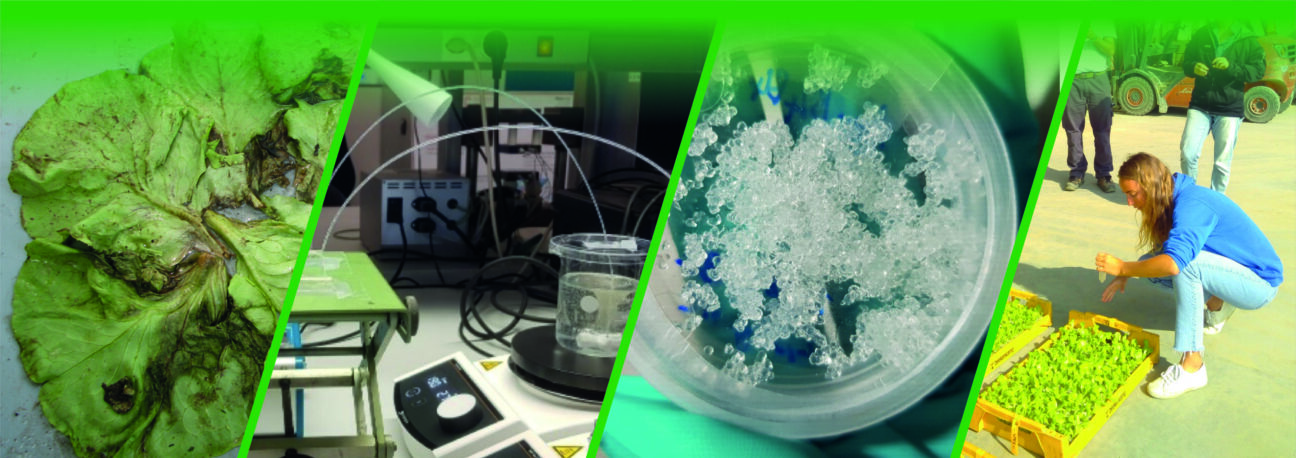
This project aims to develop a new type of biofungicide by combining, in the form of microcapsules, several microorganisms, both fungi and bacteria, that act in an active and synergistic way. To achieve this, we have five objectives, distributed among the three collaborating institutions. The first objective is to isolate and select effective bacterial-fungal combinations for a given pathosystem (Unine). The second is to ensure the environmental safety of these new biofungicides through in-depth genetic testing (Unine and FiBL). The third objective is to use microfluidics to create an effective formulation in the form of microcapsules and to develop a manufacturing process for industrial production (HE-Arc). The fourth is to test this new formulation under real-world conditions (FiBL, in collaboration with OTM and FRI). Finally, the fifth objective is to collaborate directly with producers to meet their needs (CEDD-AgroEcoClim, in collaboration with OTM and FRI).
The results of this project will allow for the development of an ecological alternative to synthetic fungicides, anticipating future restrictions on pesticides and providing new solutions for sustainable agriculture.
ENHANCE – ENcapsulation and Highways for Agricultural Consortia Efficiency
Publication
Partners