GoGreen
This research project aims to develop a sustainable conservation strategy for archaeological iron artifacts using microorganisms. A Ph.D. thesis explores the physicochemical properties of extremophilic microorganisms, particularly yeasts like Meyerozyma spp., for stabilizing iron artifacts against corrosion. A key factor in the degradation of these artifacts is contamination by chloride ions, which accelerate corrosion and promote the formation of unstable products such as akaganéite. Conventional stabilization methods often use chemicals with limited effectiveness and present environmental and safety challenges.
The proposed biological approach relies on the ability of microbial biomass to chelate chloride ions and on enzymatic processes to eliminate harmful chloride ions and transform active corrosion products into stable compounds like magnetite or goethite. The study focuses on dead yeast biomass, known for its resilience in high-salinity and metal-rich environments, making it particularly suitable for interacting with chloride ions.
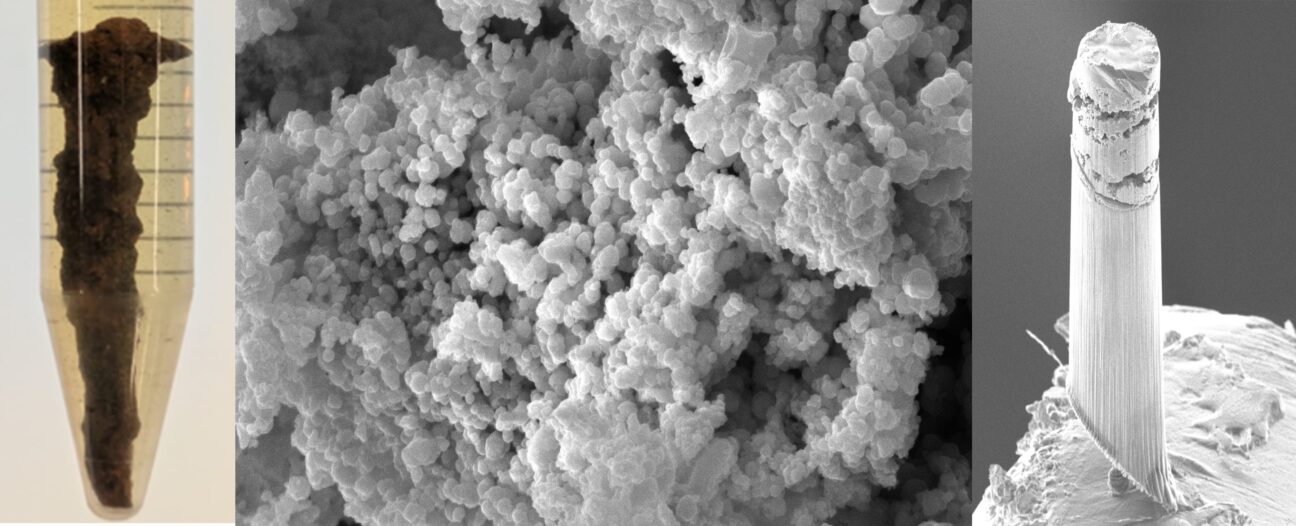
The research combines experimental studies and advanced material characterization techniques such as XRD, FTIR, SEM, and Raman spectroscopy to optimize treatment protocols. By elucidating the mechanisms through which microbial biomass stabilizes iron, this research aims to propose an innovative and sustainable conservation method, in line with United Nations policies on climate change and environmental safety.
Publication
Petrasz, P., Zhioua, S., James, S., Bindschedler, S., Junier, P. & E. Joseph. 2024. Green alternatives for archaeological iron atabilization. Studies in conservation, 1–11.


