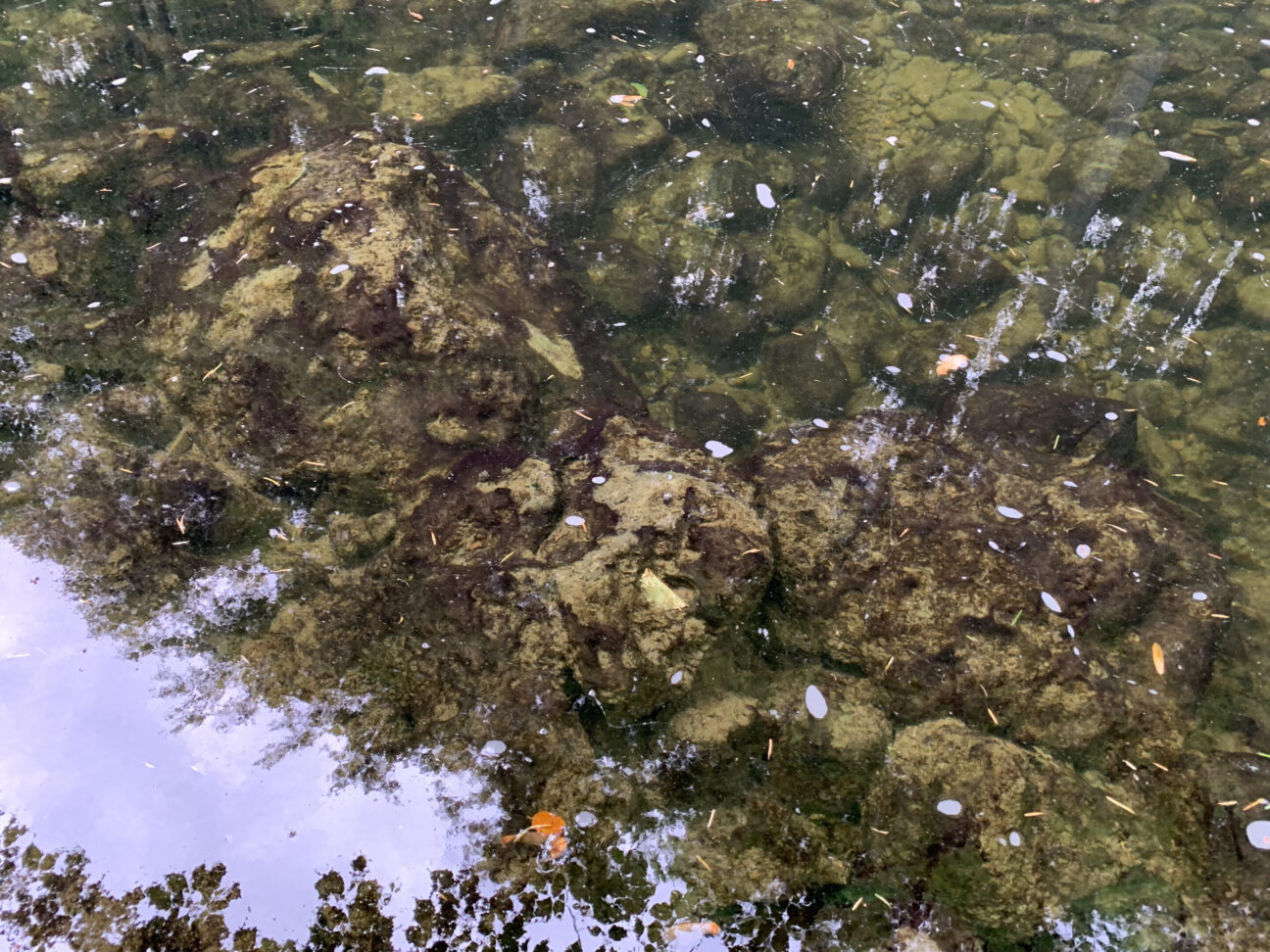
Predicting and preventing the development of toxin-producing benthic cyanobacteria
Funding
Velux Foundation
Federal Office for the Environment.
PI Prof. Pilar Junier and Co-PI Dr. Diego Gonzalez
This project focuses on the risks posed by toxic benthic cyanobacterial blooms. We will study how light and key environmental factors influence their growth and toxin production. Our goal is to create tools to monitor and reduce the impact of these blooms by combining environmental surveillance with experimental studies on benthic species. This approach will allow us to develop a risk assessment and decision-making strategy, including public self-reporting for early warning. We will also explore biological control methods to limit the toxigenic species. A recent bloom in Lake Neuchâtel offers a model for refining these strategies and improving management and mitigation efforts.
Publication
- Junier P, Cailleau G, Fatton M, Udriet P, Hashmi I, Bregnard D, Corona-Ramirez A, Francesco ED, Kuhn T, Mangia N, Zhioua S, Hunkeler D, Bindschedler S, Sieber S, Gonzalez D. A cohesive Microcoleus strain cluster causes benthic cyanotoxic blooms in rivers worldwide. Water Res X. 2024 Sep 4;24:100252. doi: 10.1016/j.wroa.2024.100252. PMID: 39308956; PMCID: PMC11416633.

News
Take part in monitoring toxic cyanobacteria in Switzerland!
In July 2020, several dogs lost their lives after ingesting toxic cyanobacterial mats along the shores of Lake Neuchâtel. Since then, we have been actively working to better understand these dangerous blooms.
We are launching a citizen science project that allows you to contribute to the research! In collaboration with the FOEN, LAMUN invites you to join our initiative: