CLIMIG – Bibliographic Database on Migration and Climate
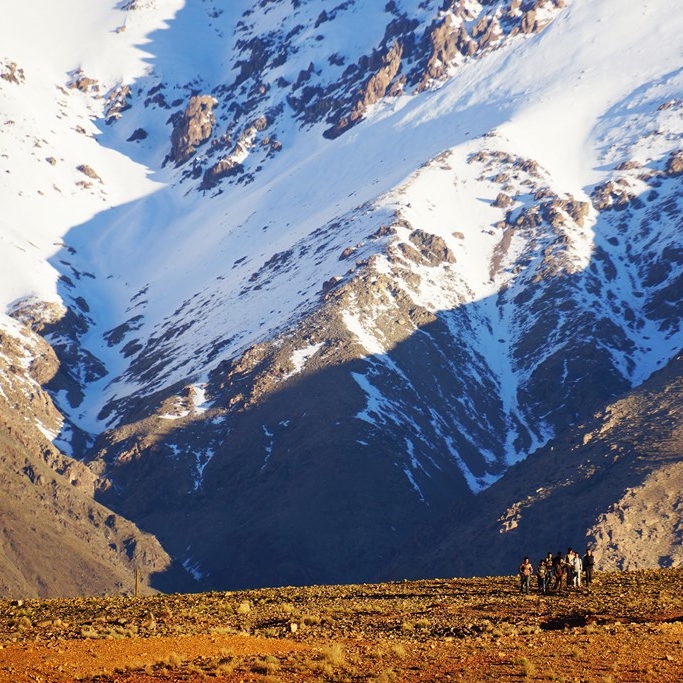
© Jesus Del Rio
https://www.photosjesusdelrio.com
Institution: Institute of Geography, University of Neuchâtel, Switzerland
Website: CLIMIG – Bibliographic Database on Migration and Climate
Overview and Objectives
Compiled at the Institute of Geography of the University of Neuchâtel, CLIMIG is the first
comprehensive collection of resources specifically focusing on the nexus between migration, the
environment, and climate change.• Mission: To provide a major, free hub for researchers worldwide on this critical topic.
• Methodology: The database uses advanced bibliographic search technologies to identify new
publications. However, the selection, entry creation, and keyword attribution are performed
by humans, ensuring scientific accuracy and coherence.
• Updates: The database is updated weekl
Accessing the Databas
To facilitate consultation and analysis, CLIMIG is now accessible via the ClimoHub platform, although
the static version remains available
Online Exploration via ClimoHub (Recommended)
ClimoHub is a knowledge hub dedicated to climate mobilities, offering centralized access to data,
maps, and analyses.
• Features: Advanced search, interactive navigation, and reference browsing.
• Access Path: Go to https://www.climohub.org/ → Click on « Find Literature » → Select « Climig
Database »
Download the EndNote Version
For users who prefer offline work or integration into their own bibliographic libraries.
• Format : EndNote or EXCEL (.enlx / .xls).
• How to Obtain: Send a request to climig@unine.ch.The database will be sent to you free of
charge as soon as possible.
• Support: Do not hesitate to contact the team for any questions regarding its use
Searches on Climig
In the endnote search bars, please select keywords.
Then you can do your research according to the list of keywords that we have established
Four families of keywords are used :
- Area identifies the geographic areas of the studies based on UN definitions.
- Type identifies the kind of case study and its methodology.
- Environmental hazard identifies the types of environmental perturbation studied.
- Focus relates to the specific approach of the paper, which may be focused on gender issues, on legal issues, etc.
Area
Continents, countries, regions or even cities are designated in the keywords field. Moreover, Foresight’s (2011) vulnerable ecoregions are also identified (drylands, mountain and low-elevation coastal zones). User is then able to look for papers related to a whole continent, to a specific country or to particular regions or cities.
Type
- Overview is used for synthesis on the topic.
- Law is related to papers dealing with legal issues and/or policies.
For empirical studies, Climig contains the keyword type :
- Type1: Ecological models based on area characteristics (spatial analysis)
- Type2: Multilevel analysis based on area and individual characteristics
- Type3: Analysis of individual data based on large sample surveys (>100)
- Type4: Historical analogues
- Type5: Indexes of vulnerability, hotspots identification, scenarios, regional case studies, etc
- Type6: Qualitative field case studies using ethnographic methods and small sample questionnaires
Environmental hazard
- Flood: flooding, flash flood, rainfall variability, …
- Hurricane: typhoon, cyclone, storm, …
- SLR: sea level rise, slr, coastal erosion, …
- Drought: desertification, heat waves, dry, rainfall variability, land degradation, …
Focus
- DRR / EWS: disaster risk reduction / early-warning system in environmental migration
- Gender: studies dealing environmental migration with a special focus on gender issues
- Migadapt: migration as an adaptation response, as a strategy to cope with environmental degradations
- Perception: representations and perceptions of actors on climate change
- Statelessness: climate change induced statelessness
- Trapped: studies dealing with immobility and trapped populations
- Conflict: studies linking environmental migrations and conflicts
