Events
Thursday, 12:15-13:15
Room F200
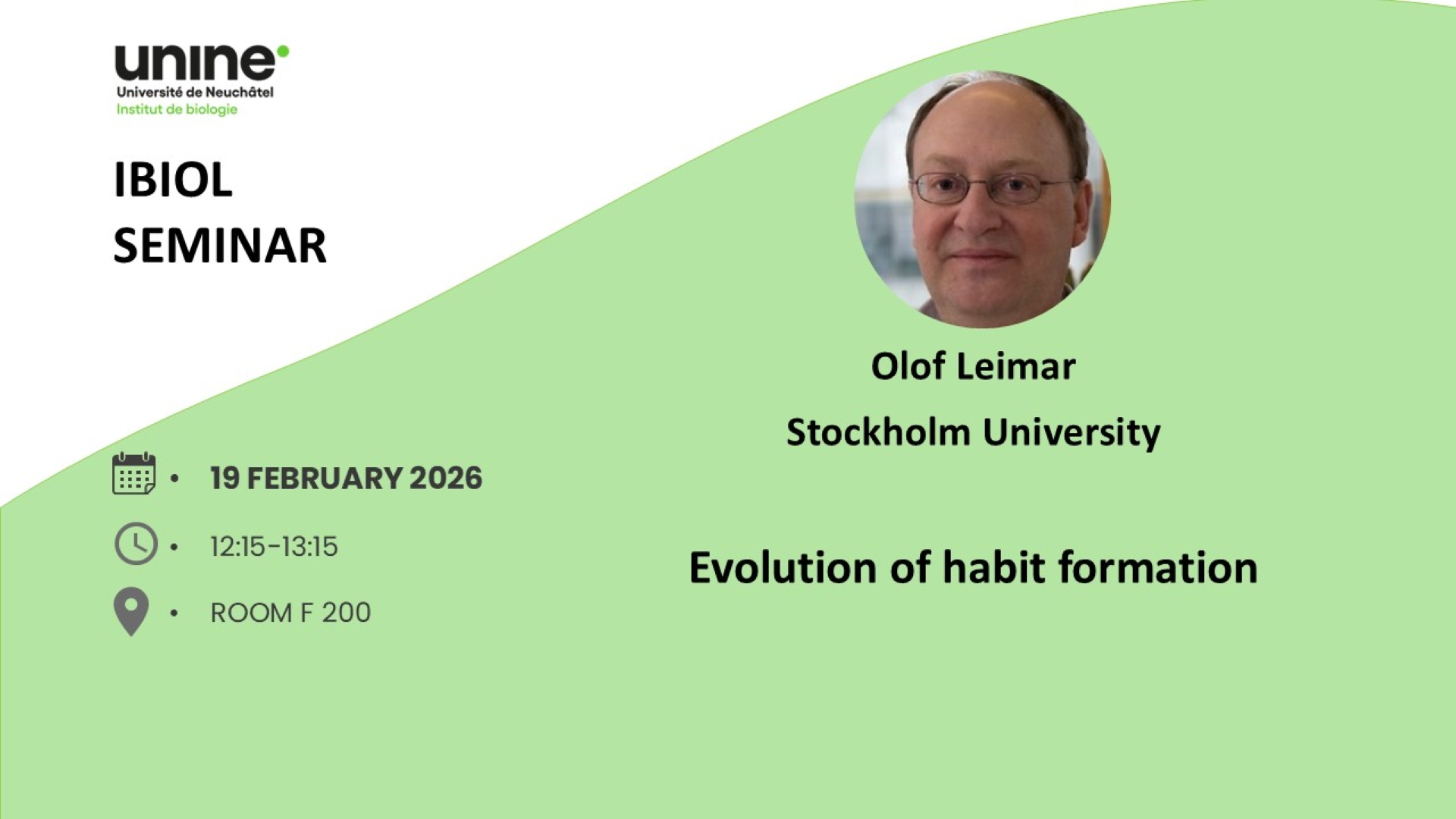
- 19 February: Olof Leimar, Evolution of habit formation, University of Stockholm (laboratory of behavioury ecology)
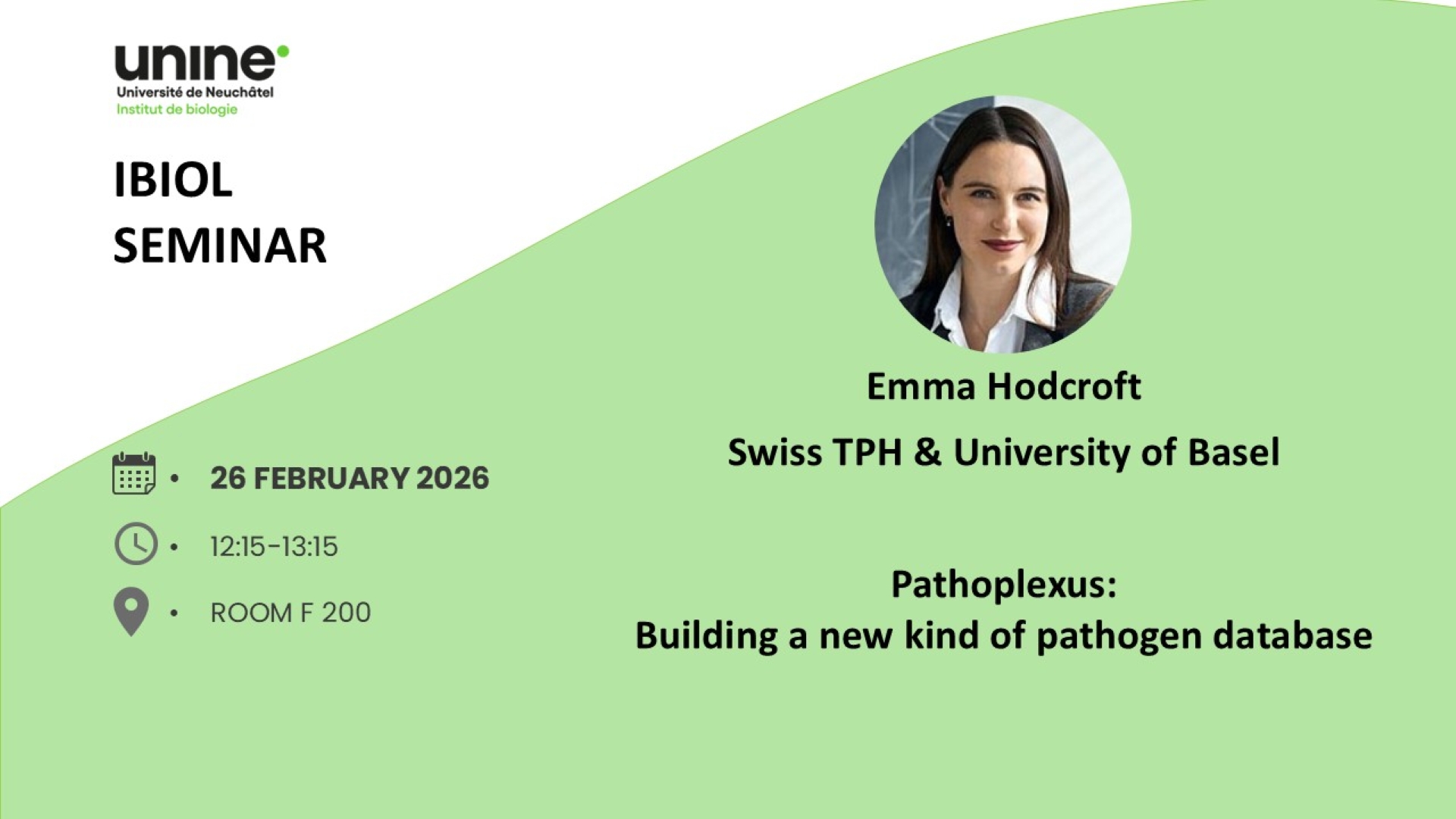
- 26 February: Emma Hodcroft, Pathoplexus: Building a new kind of pathogen database, Swiss TPH & University of Basel (laboratory of evolutionary genetics)
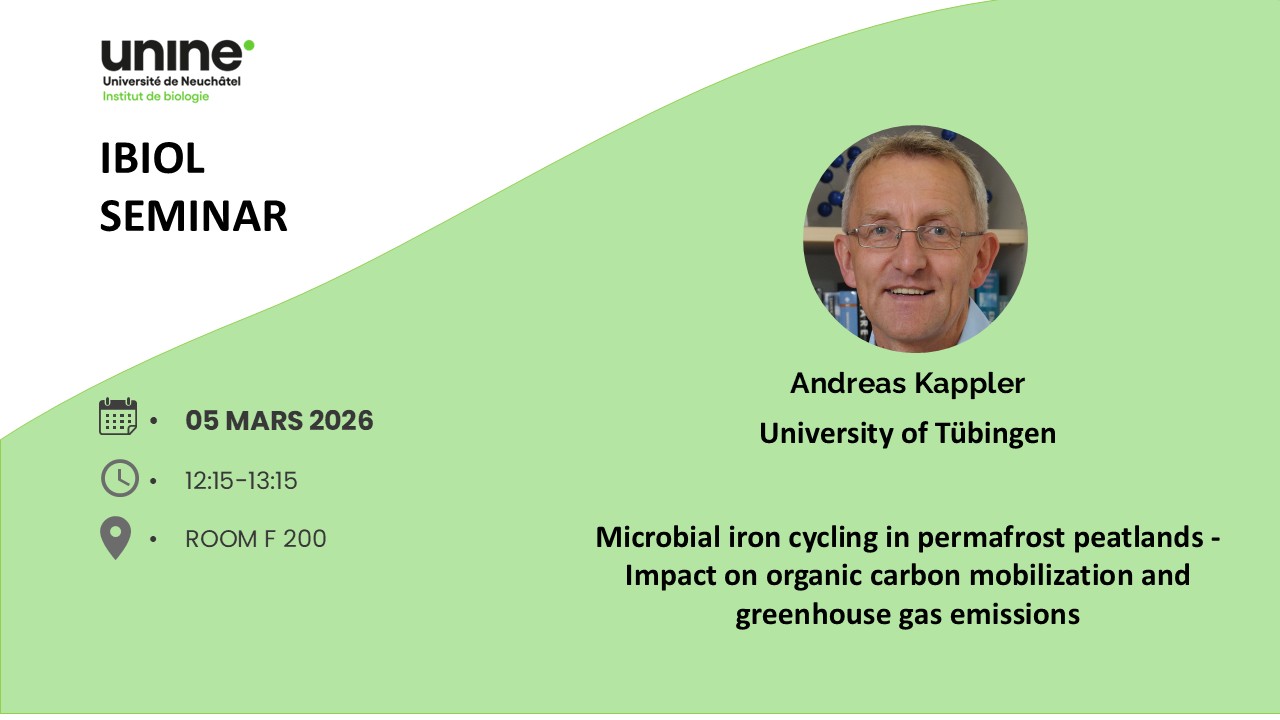
- 5 March: Andreas Kappler, Microbial iron cycling in permafrost peatlands-Impact on organic carbon mobilization and greenhouse gas emissions, University of Tübingen (laboratory of Microbiology)
- 19 March: Heike Lindner, Stay hydrated – Deciphering the development and physiology of leaf succulence, University of Bern – Institute of Plant Sciences (Plant developmental plasticity)
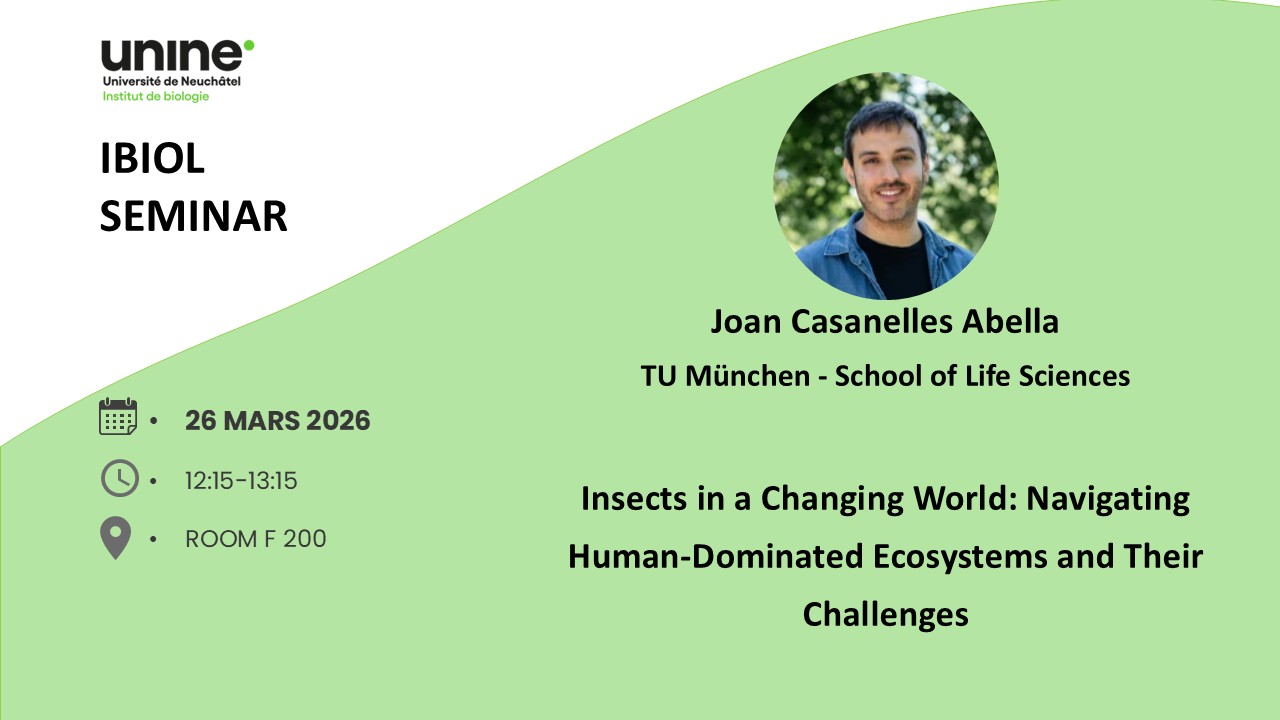
- 26 March: Joan Casanelles Abella, Insects in a Changing World: Navigating Human-Dominated Ecosystems and Their Challenges, TU München – School of Life Sciences (laboratory of functional ecology)
- 2 April: Ek del Val de Gortari, Arthropods in the new agricultural era: how bugs are responding to new management approaches in milpa fields, UNAM (laboratory of chemical ecology)
- 16 April: Jeremy Gauthier, Naturéum, State Museum of Natural Sciences, Lausanne (laboratory of biodiversity genomics)
- 23 April: Philippe Reymond, University of Lausanne (laboratory of cell and molecular biology)
- 30 April: Pete Buston, Boston University (laboratory of behavioral physiology)
- 21 May: Mathieu Perret, Conservatory and Botanical Gardens of Geneva (laboratory of soil biodiversity)
- 28 May: Nicolas Mathevon, University of Saint-Etienne (laboratory of comparative cogntion)
Wednesday, 12:15-13:30
Room F200
- 25 mars : TALK1 Branching out: What Early-Diverging Fungi Teach Us About Genetic Regulation. Carlos Lax (génétique évolutive); TALK2 Cell Fate Plasticity During Lateral Root Formatin in Grasses. Marius Malai (biologie moléculaire et cellulaire); TALK3 River Revitalisation for Swiss Wild Bees, Greg Egloff
- 21 November 2025 17h: Camilo RIVERA ARRIVILLAGA: Exploring the impact of the Milpa agricultural system on soil microbiome, plant performance and belowground interactions; (laboratory of entomology)
Biology 26, 12-13 February 2026, University of Neuchâtel
ChemEco26, 11 February 2026, University of Neuchâtel