The Master in Society
The Master in Innovation of the University of Neuchâtel is fully part of contemporary society.
At the crossroads of economic, social and legal sciences, it offers a critical and interdisciplinary approach to innovation, conceived as a phenomenon that is both technical, social, economic and political.
Facing the major contemporary transformations, digital, environmental, industrial and societal, the Master trains profiles capable of understanding these complex dynamics, analyzing their stakes and contributing to them in a responsible and informed manner.
The commitments of the Master in Innovation
The Master in Innovation approaches innovation through the major questions that run through our societies: digitalization, climate change, industry 4.0, globalization, social justice as well as transformations of work.
These issues are analyzed through solid theoretical approaches, but also from concrete cases and current problems, in order to connect academic reflection to social, economic and institutional realities.
Interdisciplinarity constitutes one of the foundations of the Master in Innovation.
Courses and students from the Faculties of Arts and Humanities, Economics and Law meet and collaborate throughout the program.
This diversity of academic backgrounds fosters the confrontation of points of view, the learning of dialogue between disciplines and the development of profiles capable of navigating between different analytical frameworks. It allows students to build a personalized path and to acquire a global understanding of innovation processes.
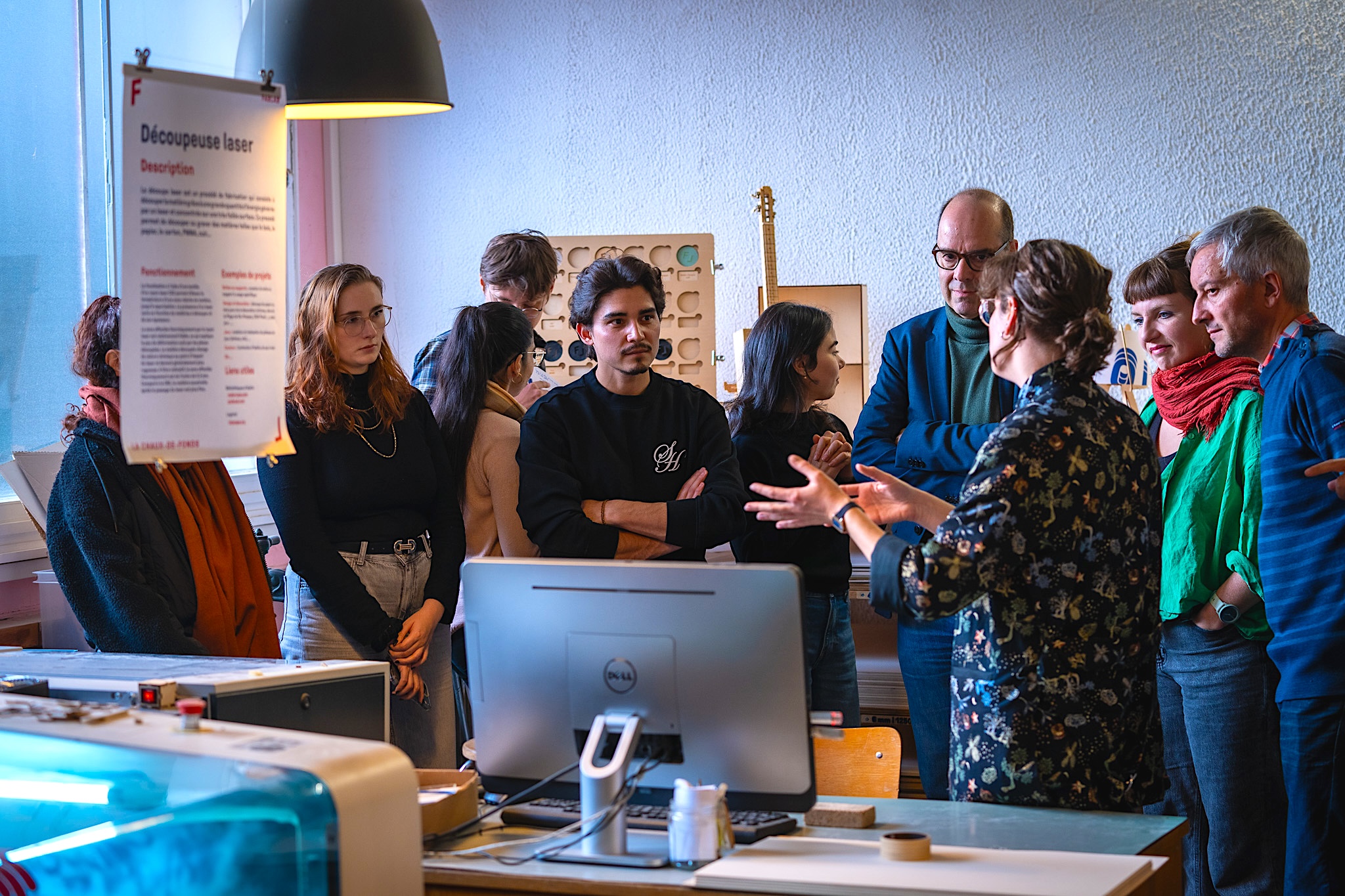
The Master in Innovation is also distinguished by a friendly working atmosphere, made possible by small class sizes and close contact with the teaching staff.
This configuration fosters exchanges, active participation and individual support.
Formal and informal events punctuate the program, notably outings and activities organized each semester, strengthening group cohesion and contributing to a stimulating and collaborative learning environment.
The Master is part of a rich local, national and international ecosystem, in connection with public institutions, companies, organizations and committed actors.
Students are encouraged to actively engage in this ecosystem through applied projects, collaborations and regular exchanges with external partners.
These commitments take concrete form through events, partnerships and varied professional trajectories.

