Main values of the Master

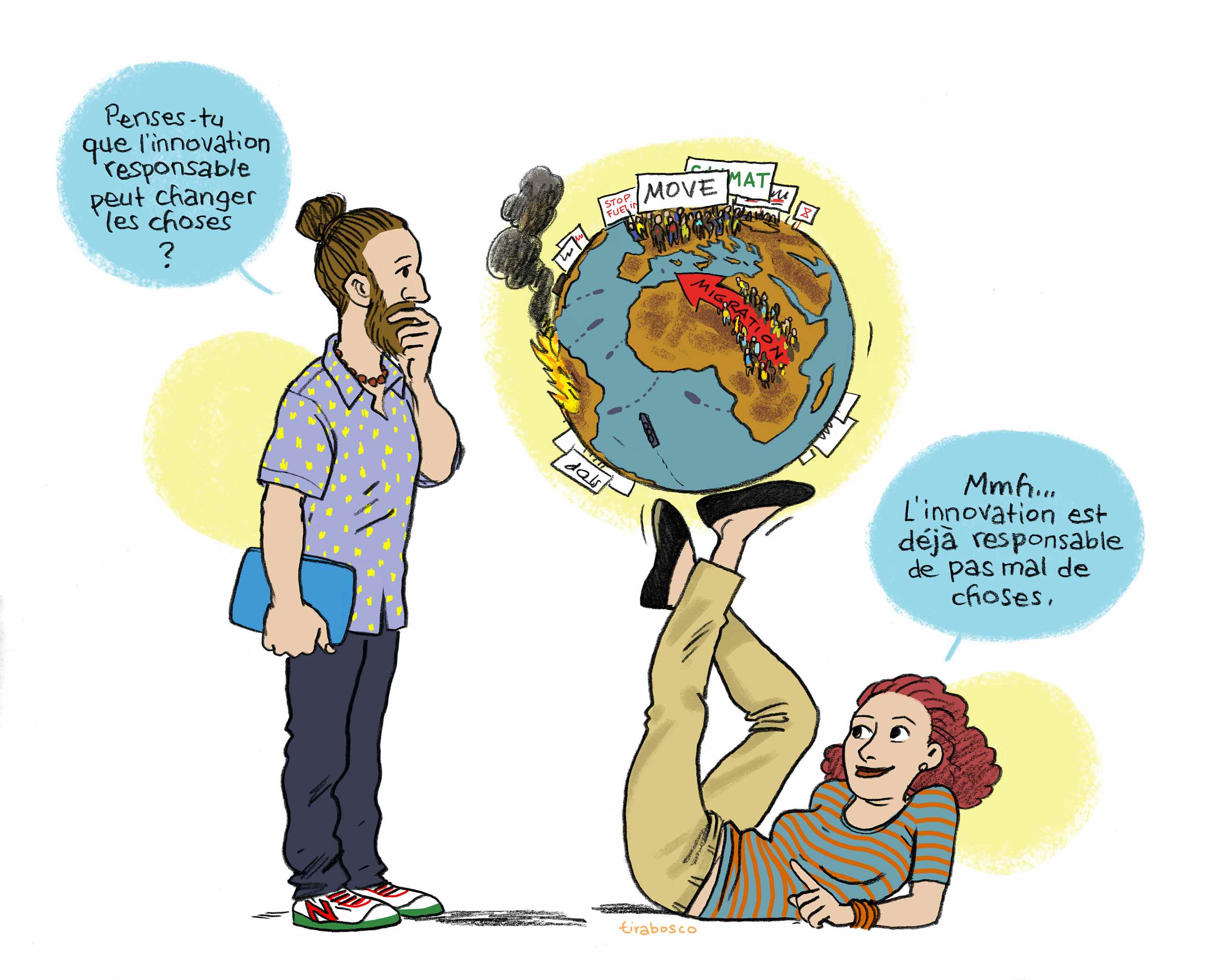
The Master in Innovation allows students to examine the contemporary challenges of innovation. Digitalization, climate change, Industry 4.0, globalization and social justice are all topics that can be illuminated through the study of innovation.
Many courses and exercises aim to link these contemporary challenges with the theoretical principles of innovation. These current issues are interesting to address through an academic lens and correspond to the expectations of society.
One of the particular features of the Master in Innovation is the intersection of courses and students from different disciplines. The choice of courses in the Faculties of Humanities, Economics and Law allows each student to build a varied academic pathway. The knowledge acquired in each field gives graduates a comprehensive and interdisciplinary profile.
Within the classroom, the mix of students with different backgrounds also leads to enriching exchanges. They have the opportunity to encounter different ways of thinking and to learn how to collaborate with people from different educational backgrounds.
Conviviality is another important aspect of the Master in Innovation. The relatively small number of students and the proximity to the teaching staff allow for the development of a convivial atmosphere that is pleasant to work in.
The Master is punctuated by formal and informal events that offer opportunities to meet in a more relaxed setting. The Master outings, organized once per semester, help strengthen the bonds between students.
Career
The Master in Innovation emphasizes three fundamental pillars through its teaching approach and its courses: interdisciplinarity, contemporary societal challenges and close collaborations.
These three values are essential for proactive entry into the job market. The Master supports this transition through the possibility of a thesis based on an internship, interactive teaching and events connected to companies and society.
The Master in Innovation opens up career opportunities in a variety of fields. Graduates, capable of understanding and supporting innovation processes in relation to current and future challenges, will be able to apply their skills within companies, organizations or public administrations at different operational levels and stages of development.