In addition, many species contain an extra barrier cell layer, present in the most outer cortex cell layer i.e. below the epidermis: the hypodermis or exodermis. The latter term is applied when the hypodermis contains a localized lignification and suberin deposition in their cell walls with a similar barrier function as the endodermis. A recent, pioneering study has revealed that suberin deposition in the exodermis and not endodermis is important for drought tolerance in tomato (Canto-Pastor et al., 2024, PMID: 38168610). However, reports linking the exodermis to LR formation are still lacking.
To address this we are also using the wild grass Brachypodium distachyon to better understand the molecular mechanism that regulates endodermis de-differentiation during lateral root formation. We have optimised root clearing protocols to use multiphoton microscopy to image lateral root developmen in Brachypodium. This resulted in an atlas of Brachypodium development (De Jesus Vieira Teixeira et al., 2024 PMID: 39158386).
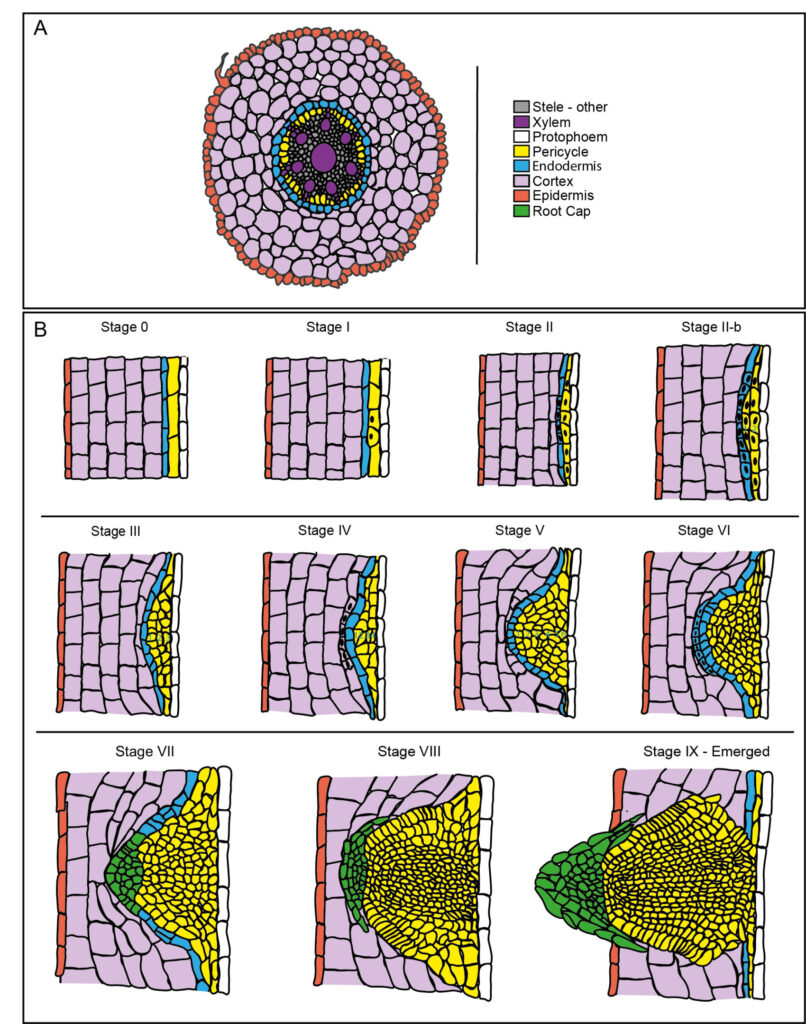
Schematic representation of LRP development in Brachypodium. (A) Representation of root cross section of Brachypodium. (B) Successive stages of LRP formation are illustrated. From De Jesus Vieira Teixeira et al., 2024 PMID: 39158386.
We will use single cell sequencing, mosaic analysis and cell and molecualr biological approaches to elucidate the mechanism(s) underlying endodermis de-differentiation during lateral root formation. Subsequently, we will test whether the identified mechanisms are conserved in other species in which the endodermis also undergoes a similar de-differentiation process.