Research
The research of the group aims at an improved mechanistic and quantitative understanding of processes that control the mobility, bioavailibility and cycling of carbon, nutrients and trace elements (e.g. As, Zn) in terrestrial environments. This fundamental knowledge will help to better predict how terrestrial environments respond to changing environmental conditions.
Current Projects
Funding: SNSF Starting Grant (2025 – 2030)
Soils and sediments are critical reservoirs for carbon and play a pivotal role in regulating the global carbon balance. Carbon dynamics, including the transformation of organic carbon to carbon dioxide and methane; two major greenhouse gases, are influenced by complex interactions with soil iron mineral phases. However, changing environmental conditions may lead to mineral transformations. Yet, our understanding of the impact of mechanisms and processes that control soil organic carbon dynamics are incomplete.
This research investigates the impact of iron mineral transformations on carbon dynamics in redox-affected soils and sediments both in the laboratory and in-situ. The expected outcomes of this work include knowledge on the environmental factors influencing mineral-mediated carbon dynamics in redox active soils; information which is critical to improving predictions of carbon turnover in soils the context of climate change. Read more about it in the links below:

Iron minerals are abundant in soils and sediments. With high surface areas, these minerals are often linked to the sorption and stabilization of nutrients and trace elements. However, in the absence of oxygen, Fe(III) can serve as an electron acceptor during microbial respiration. The reductive dissolution of Fe(III)-bearing minerals leads to the mineral recrystallization or transformation and the release and re-distribution of mineral-associated nutrients and trace elements.
In nature, however, pure iron minerals rarely form. Rather, the ubiquitous presence of natural organic matter (OM) in soils and sediments promotes the formation mineral-organic associations. The properties and reactivity of organic-associated minerals tend to differ from pure minerals. This research aims to elucidate mechanisms and impacts of organic carbon on iron mineral recrystallization and transformation in order to better understand the role of iron minerals in facilitating nutrient and trace element cycling in terrestrial environments.

Publications:
ThomasArrigo, L.K., Bouchet, S., Kaegi, R., Kretzschmar, R.: Organic matter influences transformation products during sulfidization of ferrihydrite. Environ. Sci. Nano. 2020, 7: 3405-3418. doi:10.1039/D0EN00398K
ThomasArrigo, L.K., Kaegi, R., Kretzschmar, R.: Ferrihydrite growth and transformation in the presence of ferrous iron and model organic ligands. Environ. Sci. Technol. 2019, 53: 13636-13647. doi:10.1021/acs.est.9b03952
ThomasArrigo, L.K., Byrne, J.M., Kappler, A., Kretzschmar, R.: Impact of organic matter on Fe(II)-catalyzed mineral transformations in ferrihydrite-organic matter coprecipitates. Environ. Sci. Technol. 2018, 52: 12316-12326. doi:10.1021/acs.est.8b03206
Funding: SNSF Project Grant (2023 – 2025) ‘Coupled biogeochemical cycles: The impact of changing climate on (iron) mineral protection of organic carbon in high latitude, volcanic soils’,
Swiss Polar Institute Polar Access fund (2020 – 2021) ‘Coupled biogeochemical cycles of Fe and C during redox cycling in Fe-rich wetland soils of Iceland’
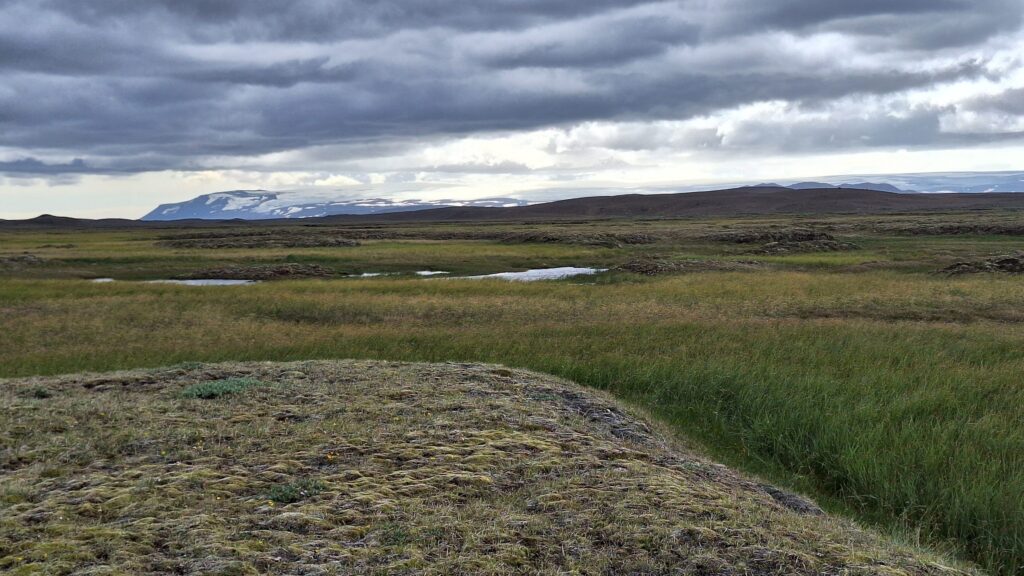
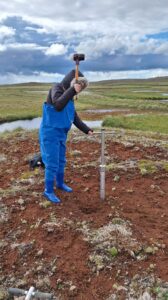
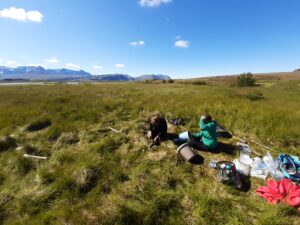
The aim of this project is to investigate the role of mineral phases for the stabilization and mineralization of organic carbon in high latitude volcanic soils and assess their vulnerability under changing global climate. To this end, we will collect soil samples from selected high latitude volcanic soils (e.g., Iceland) to be used in laboratory-based experiments. Our specific goals are (1) to investigate the nature of mineral organic associations responsible for the storage of organic carbon and (2) to identify environmental parameters influencing mineral-related mechanisms of SOC stabilization.
Our work will generate important information about the processes controlling carbon turnover in high latitude, volcanic soils which should enable a better understanding of the role of these soils in global carbon cycling. In addition, this work will strengthen our understanding of how changes in environmental parameters may impact the stabilization and mobilization of soil organic carbon in these soils. This information is necessary to better predict the possible impacts of climate change on high latitude volcanic soils.

Publications:
ThomasArrigo, L.K., Notini, L., Shuster, J., Nydegger, T., Vontobel, S., Fischer, S., Kappler, A., Kretzschmar, R.: Mineral and elemental composition of iron-rich precipitates from Fe-rich Icelandic wetlands: Implications for Fe and C export. Sci. Tot. Environ. 2022, 816: 151567. doi:10.1016/j.scitotenv.2021.151567
ThomasArrigo, L.K. and Kretzschmar, R.: Iron speciation changes and mobilization of colloids during redox cycling in Fe-rich, Icelandic peat soils. Geoderma. 2022, 428: 116217. doi:10.1016/j.geoderma.2022.116217
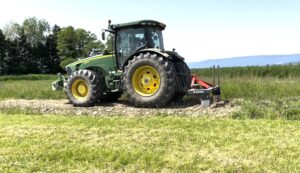
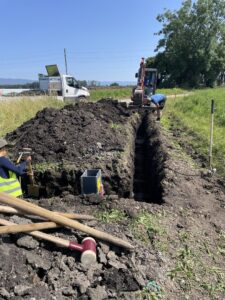
Peatlands store vast amounts of organic carbon, but when drained, they become major sources of CO₂ due to accelerated microbial decomposition. Multiple strategies exist to mitigate these emissions including rewetting and covering the peat surface with a mineral soil layer. Combined, these approaches may limit oxygen diffusion into the peat and build organo-mineral associations, thereby slowing down microbial activity and carbon loss.
Together with the Hydrochemistry and Contaminants group, this project investigates how carbon dynamics respond to restoration measures. We study changes in greenhouse gas emissions, microbial activity, and organic matter composition following rewetting and mineral covering. By combining field monitoring with laboratory experiments, we aim to better understand the effectiveness of this approach in stabilizing carbon and supporting peatland restoration under changing environmental conditions.
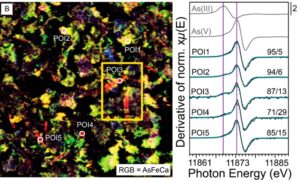
Iron and manganese minerals, including Fe-bearing clay minerals, play a central role in regulating the mobility and availability of nutrients and trace elements in soils. Under low-oxygen conditions, these minerals can undergo redox transformations that alter their structure and reactivity, leading to the release, redistribution, or retention of associated elements.
Natural environments often experience fluctuating redox conditions, such as through wet–dry or freeze–thaw cycles. These changes drive repeated mineral oxidation and reduction, producing transient, highly reactive mineral phases. These phases interact strongly with key elements like carbon, phosphorus, sulfur, and various trace metals like As, Cd, Zn, Cr, and Hg.
This research explores how redox-active minerals influence nutrient and trace element cycling in soils, aiming to better understand their role in shaping biogeochemical processes under dynamic environmental conditions.

Publications:
Schulz, K., Wisawapipat, W., Barmettler, K., Grigg, A.R.C., Kubeneck, L.J., Notini, L., ThomasArrigo, L.K., Kretzschmar, R.: Iron oxyhydroxide transformation in a flooded rice paddy field and the effect of adsorbed phosphate. Environ. Sci. Technol. 2024, 58, 10601-10610. doi:10.1021/acs.est.4c01519
Schulz, K., Kaegi, R., ThomasArrigo, L.K., Kretzschmar, R.: Stabilization of ferrihydrite and lepidocrocite by silica during Fe(II)-catalyzed mineral transformation: Impact on mineral morphology and silica distribution. Environ. Sci. Technol. 2022, 56: 5929-5938. doi:10.1021/acs.est.1c08789
Gubler, R. and ThomasArrigo, L.K.: Ferrous iron enhances arsenic sorption and oxidation by non-stoichiometric magnetite and maghemite. J. Haz. Mat. 2021, 402: 123425. doi:10.1016/j.jhazmat.2020.123425
Cai, X., ThomasArrigo, L.K., Fang, X., Bouchet, S., Cui, Y., Kretzschmar, R.: Impact of organic matter on microbially-mediated reduction and mobilization of arsenic and iron in arsenic(V)-bearing ferrihydrite. Environ. Sci. Technol. 2020, 55: 1319-1328. doi:10.1021/acs.est.0c05329
ThomasArrigo, L.K., Mikutta, C., Lohmayer, R., Planer-Friedrich, B., Kretzschmar, R.: Sulfidization of organic freshwater flocs from a minerotrophic peatland: Speciation changes of iron, sulfur, and arsenic. Environ. Sci. Technol. 2016, 50: 3607-3616. doi:10.1021/acs.est.5b05791
ThomasArrigo, L.K., Mikutta, C., Byrne, J.M., Barmettler, K., Kappler, A., Kretzschmar, R.: Iron and arsenic speciation and distribution in organic flocs from streambeds of an arsenic-enriched peatland. Environ. Sci. Technol. 2014, 48: 13218-13228. doi:10.1021/es503550g
Funding: Swiss Polar Institute Exploratory Grant (2024 – 2026) ‘Assessing the role of iron minerals as drivers of carbon release during permafrost thaw in the Icelandic highlands’
Permafrost soils are a major stock of soil organic carbon, storing an estimated 1300 Pg (petagrammes, i.e. millions of tonnes) of carbon. However, this carbon stock is vulnerable to thaw; a process which releases large quantities of carbon in the form of greenhouse gases such as CO2 and CH4. In Iceland, permafrost is widespread above 800 m.a.s.l., yet evidence of permafrost thaw is found in palsa landscapes sporadically distributed through the central highlands above 600 m.a.s.l. Palsas are peaty permafrost mounds and, with continued climate change disproportionally impacting high-latitude soils, permafrost thaw is expected to increase.
This project explores thawing permafrost soils from a palsa landscape in the Icelandic highlands. Specifically, we are interested in the role of soil minerals during permafrost thaw and their potential to promote or inhibit carbon release and transformation. To study this, we will collect soil and porewater samples from the active layer and characterize both the mineralogy and organic carbon to determine the fraction of mineral-bound organic carbon in the soil. This information will help predict the role of Icelandic permafrost soils regarding carbon emissions under continued climate change. The project will be completed in collaboration with the Agricultural University of Iceland, the University of Iceland and the Northwest Iceland Nature Research Center.