Alexandre AEBI
Interspecific interactions, taking place in agroecological ecosystems, are central to my scientific interests. My current research in biosafety is dedicated to crop and environment protection. By a combination of molecular, field, experimental and social approaches, I study the environmental impact of introduced and/or invasive insect species. Society evolution and its « new » environmental issues is central to my work. Global warming and the steady increase of international commercial activities impact the geographic distribution of many species. Global commercial exchanges erases bio-geographical boundaries between ecozones and allow the frequent movement of many organisms no longer confined to their natural geographic distribution. My research highlights general biological invasion processes that can only be fully understood in the light of social sciences. For example, the last line of defence against invasive insect is phytosanitary inspections at international airport and maritime ports. Understanding the logic of inspection choices or the risk perceptions of different inspectors is crucial to understand the full picture of biological invasions. Biological control is an alternative to pesticides and GMOs to control pest insect outbreaks. As any other technology, it comprises environmental risks. I am applying and developing environmental risk assessment procedures for improved biosecurity in the implementation of biological control in Switzerland and Europe. In particular, I work on the invasive chestnut gall wasp Dryocosmus kuriphilus and its biological control agent, Torymus sinensis, an exotic parasitoid. This model system highlights the importance of sound biology knowledge and the need to study economical, legal as well as societal aspects for a comprehensive cost-risk-benefit analysis of the situation. The way the public perceives the problem, the role of actors such as regulators, scientist or chestnut growers in the construction of the problem may influence its outcome. Being able to throw biological as well as social aspects of the problem into the balance should help regulators in their decision process, and is a step in the direction of more participatory processes and attitudes in the administration of science.
Visit the agroecology blog (http://www.unine.ch/agroecologie), a platform about teaching and research in biology and ethnology.
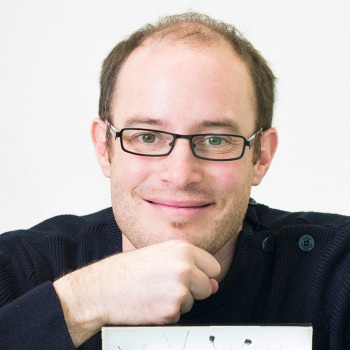
Dr. Alexandre AEBI
Maître d’Enseignement et de Recherche (MER)
alexandre.aebi@unine.ch
+41 32 718 31 47
+41 32 718 23 42
Office D216
Education History
2000 – 2004
Ph.D. Biology, University of Neuchâtel, Switzerland
1998 – 1999
M.Sc. Biology, University of Neuchâtel, Switzerland
1994 – 1998
B.Sc. Enthomolgy and Botanic, University of Neuchâtel, Switzerland
1990 – 1994
Gymnase Cantonal de Neuchâtel, Switzerland
Employment History
2012 – present
Maître d’Enseignement et de Recherche in agroecology, University of Neuchâtel, Switzerland
2008 – 2012
Scientific Collaborator, Agroscope Reckenholz-Tänikon, Research Station ART, Zürich, Switzerland
2007
Post-Doctorate, Unit of Ecology & Evolution, University of Fribourg, Switzerland
2004 – 2006
Post-Doctorate, Institute of Evolutionary Biology, University of Edinburgh, Scotland